
Professional Business Writer


The demand for mobile dining experiences is booming, making it a perfect time to explore how to start a food truck business — especially if you’re working with a tight budget. In 2025, consumers are prioritizing convenience, creativity, and value. A well-planned food truck business can meet all three. But how do you get started without draining your savings?
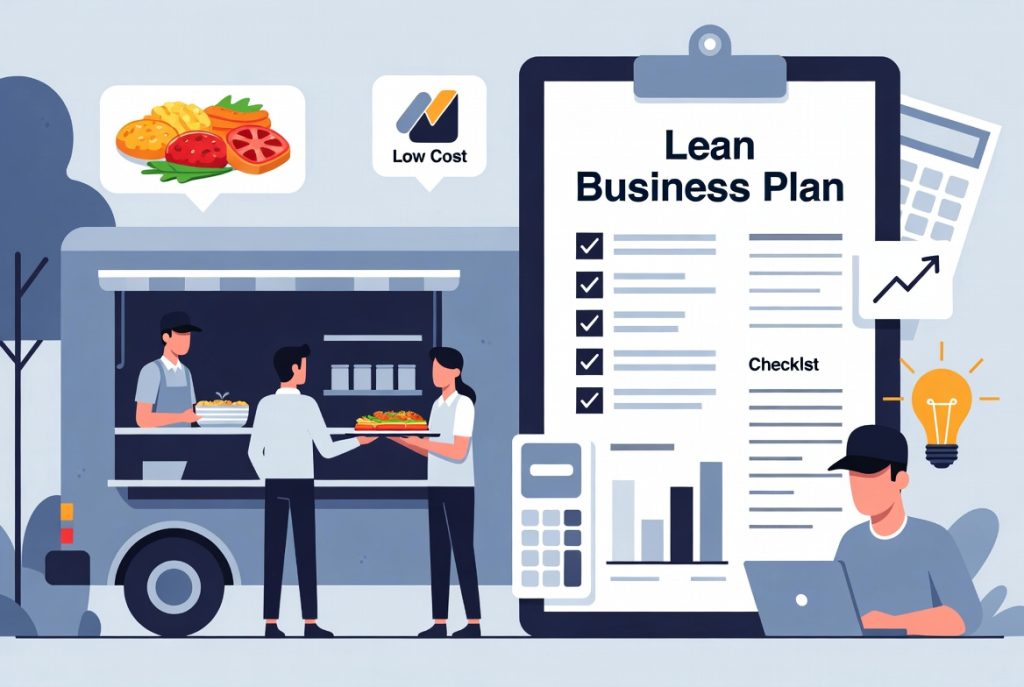
Start with a Lean Food Truck Business Plan
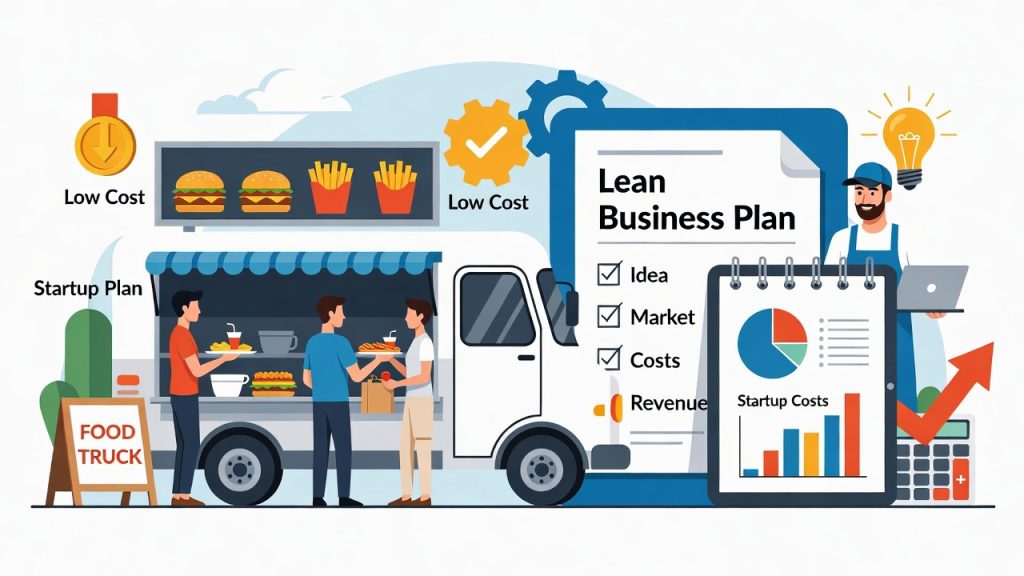
Your first step is to create a smart, simple, and scalable food truck business plan. This roadmap helps you clarify your vision, set financial goals, and secure funding if needed. Whether you use a downloadable food truck business plan template or create your own, be sure to include:
If you’re unsure how to write a food truck business plan, there are many resources and sample food truck business plan documents available online to get you started.
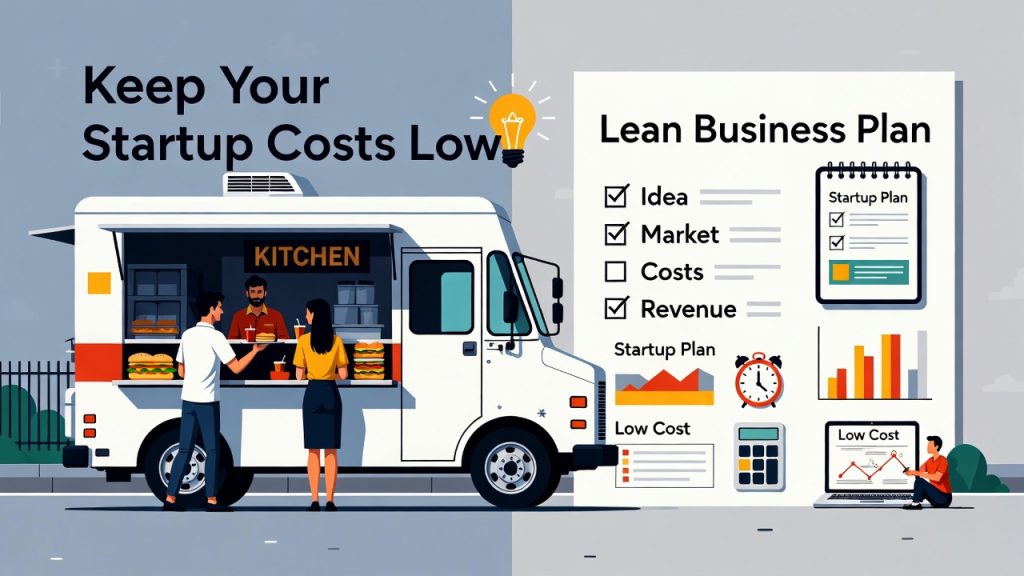
Keep Your Food Truck Startup Costs Low
Starting with a limited budget means prioritizing spending. Typical food truck startup costs range from €15,000 to €40,000+, but this can vary widely depending on:
Look for trucks that are already partially outfitted or consider starting with a trailer or cart as an interim step.
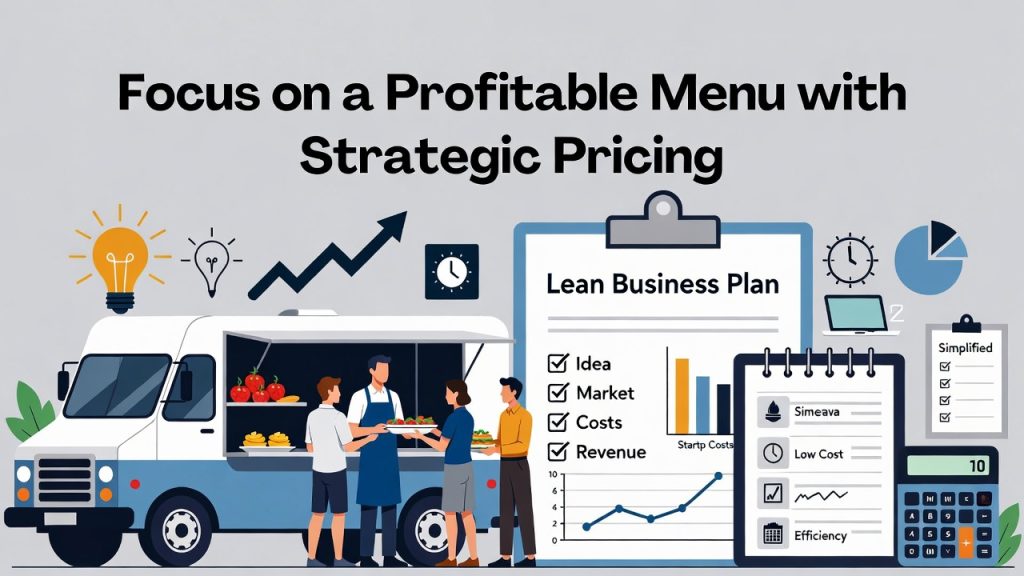
Focus on a Profitable Menu with Strategic Pricing
Success in this space requires a smart food truck menu pricing strategy. Focus on low-cost ingredients with high perceived value. Avoid overly complex items or recipes that require multiple prep steps or expensive tools. Test recipes before launch, and don’t forget to include a few upsell items like drinks, sides, or sauces.
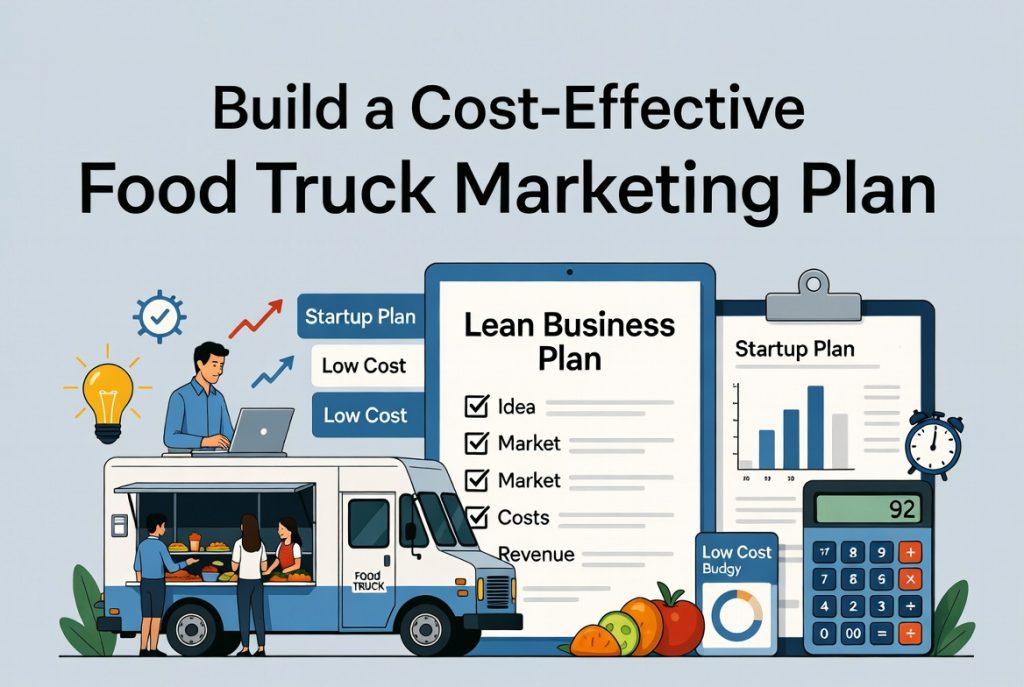
Build a Cost-Effective Food Truck Marketing Plan
When starting a food truck business, visibility is everything — and marketing doesn’t have to be expensive. A great food truck marketing plan focuses on:
You can launch a brand identity using just Canva and a few free design templates. Keep it clean, catchy, and consistent.
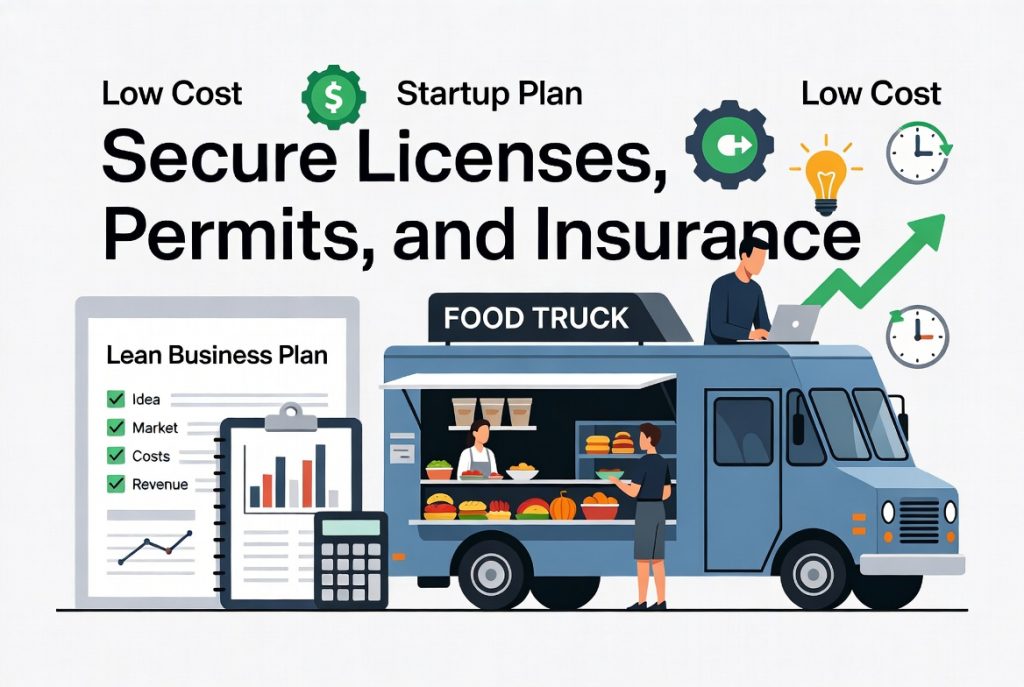
Secure Licenses, Permits, and Insurance
Permits and regulations vary by location, but typically include:
Keep these startup legal requirements in mind when writing your food truck financial plan to avoid budget surprises.
Launch and Learn Start Small and Scale
Don’t wait for everything to be perfect. Many successful entrepreneurs started with minimal equipment and evolved as they learned what customers liked. Focus on high-traffic locations, listen to feedback, and improve your menu and service each week.
You Don’t Need a Fortune to Start a Food Truck
Starting a food truck business on a small budget is not only possible — it’s practical. By using a lean food truck business plan, minimizing food truck startup costs, and being smart with your food truck marketing plan, you can enter the industry with lower risk and higher growth potential.
Whether you use a sample food truck business plan, customize your own, or follow a food truck business plan template, what matters most is taking action. And if you’re unsure how to start a food truck business or how to write a food truck business plan, remember: the best plan is the one that gets you moving.
Best Food Truck Menu Ideas for Small Towns
If you’re starting a food truck business in a small town, your menu will be one of the most important parts of your success. Unlike big cities with endless culinary options, small towns value familiar, affordable, and comforting food — often with a local twist. But that doesn’t mean your food truck menu has to be boring.
Here are smart, profitable, and customer-loved food truck menu ideas for small towns, along with tips on using a smart food truck menu pricing strategy to maximize profits without losing customers.
Gourmet Grilled Cheese with a Twist
Grilled cheese is simple, nostalgic, and highly customizable. Try flavor-packed options like:
Why it works: It’s affordable to make, easy to prep, and appeals to all ages — making it ideal for small-town lunch crowds.
Loaded Fries or Tater Tots
Offer loaded fries topped with:
Use a tiered food truck menu pricing strategy (e.g., base fries + $2 for toppings) to upsell effectively.
Classic Comfort Food Plates
Small towns love comfort food. Serve hearty plates like:
These work great in a food truck business plan focused on dinner service or late-night events.
Street Tacos (with Local Flair)
Tacos are a top food truck favorite for a reason. Offer variations like:
Add seasonal ingredients for a farm-to-table twist, and offer 2- or 3-taco combos to boost average order value.
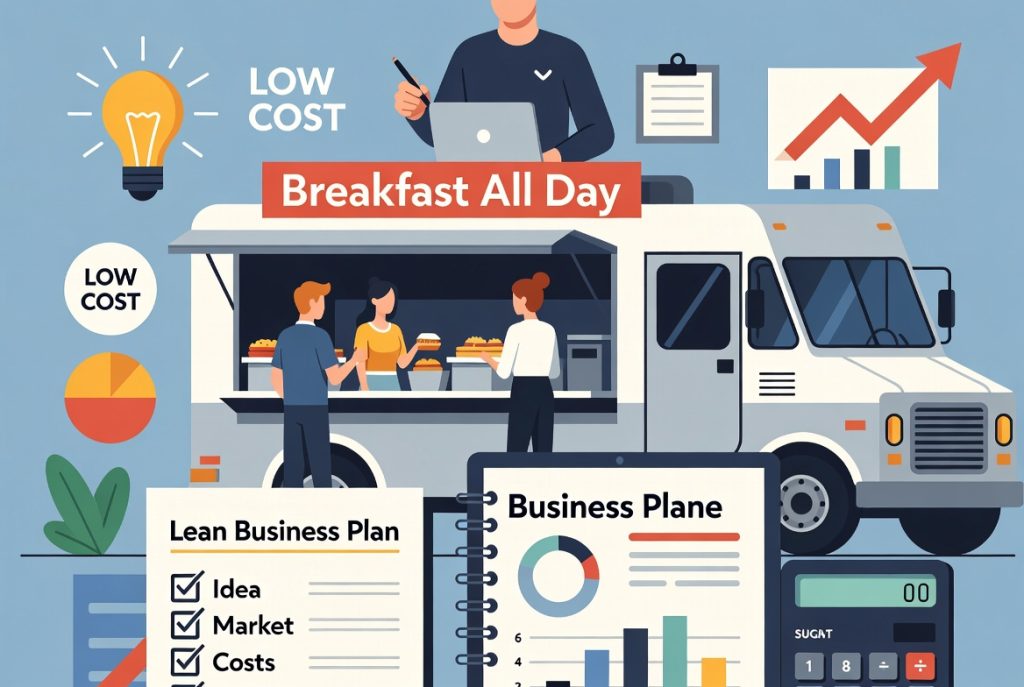
Breakfast All Day
Small-town locals love a dependable breakfast truck. Options include:
This idea fits well if your food truck startup costs are tight, since breakfast ingredients are low-cost and high-margin.
Dessert Truck Favorites
Dessert trucks are especially popular at small-town festivals. Try:
Affordable ingredients, fast prep, and high perceived value make desserts a profitable add-on or stand-alone niche.
Profitable Food Truck Niches (BBQ, Vegan, Fusion & More)
If you’re starting a food truck business in 2025, one of the most important decisions you’ll make is your niche. Choosing a profitable food truck concept not only affects your food truck business plan, but it also shapes your branding, pricing, and day-to-day operations.
Whether you’re focused on smoky meats, plant-based power, or bold global flavors, the right niche helps you stand out — especially in a competitive mobile dining market.
Below are the most profitable and in-demand food truck niches for 2025, along with ideas for your food truck marketing plan and menu pricing strategy.
BBQ Food Truck – A Timeless Winner
Barbecue is one of the most consistently successful food truck niches — especially in suburban and small-town areas. Smoked brisket, pulled pork, ribs, and mac-and-cheese sides never go out of style.
In your food truck financial plan, account for slower prep times and meat costs — but know that strong margins and repeat business make it worth it.
Dessert Food Trucks High Margins, Low Costs
From churros and crepes to donut sliders and rolled ice cream, dessert trucks continue to thrive — especially at night markets and events. You can operate with minimal staff and equipment while charging premium prices for treats.
Include seasonal or local themes in your food truck menu pricing strategy to keep people coming back.
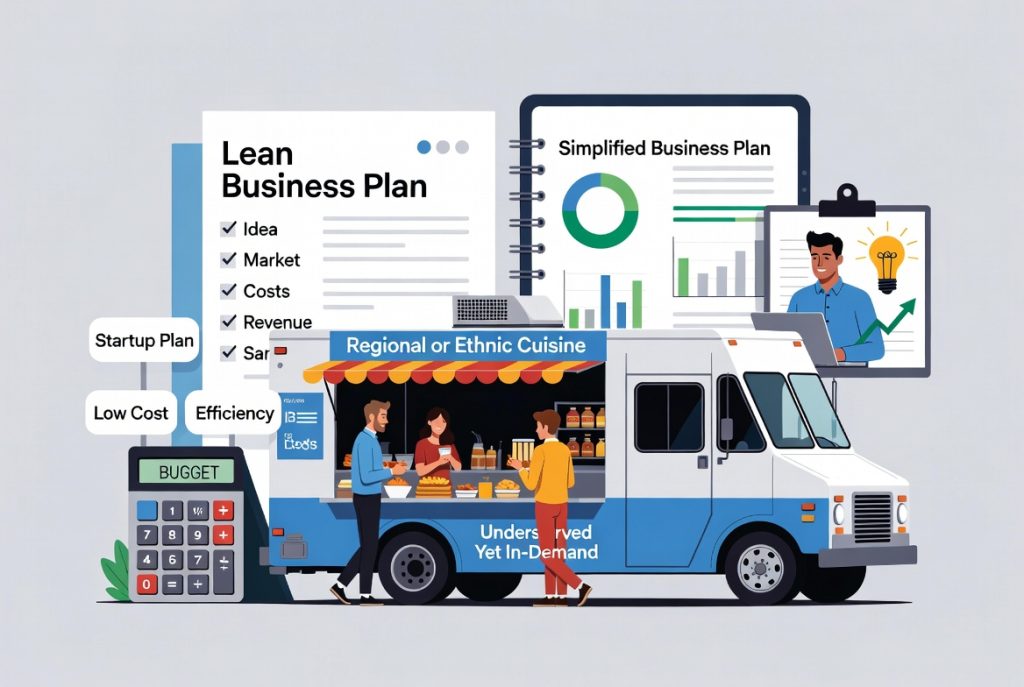
Regional or Ethnic Cuisine Underserved Yet In-Demand
Bringing authentic regional or ethnic dishes to communities that don’t have them is a strong way to differentiate. Think Cuban sandwiches, Nigerian jollof rice, Filipino adobo, or Pakistani biryani.
For this model, make sure your food truck competitor analysis includes restaurants and takeout spots nearby to spot gaps you can fill.
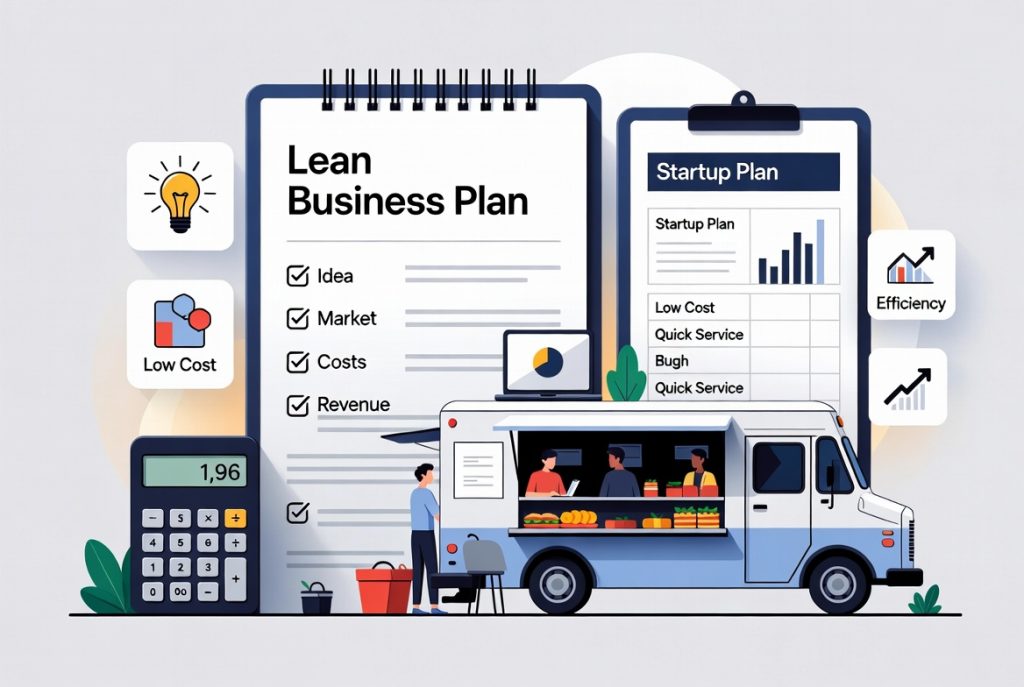
Vegan or Plant-Based Food Truck – Rising Demand
The demand for vegan options is skyrocketing, even in non-urban areas. With health-conscious and environmentally aware consumers on the rise, a vegan food truck offering items like jackfruit tacos, cauliflower wings, or lentil burgers can attract a loyal following.
This is an ideal niche for entrepreneurs seeking how to start a food truck business with a lower environmental impact and a modern angle.
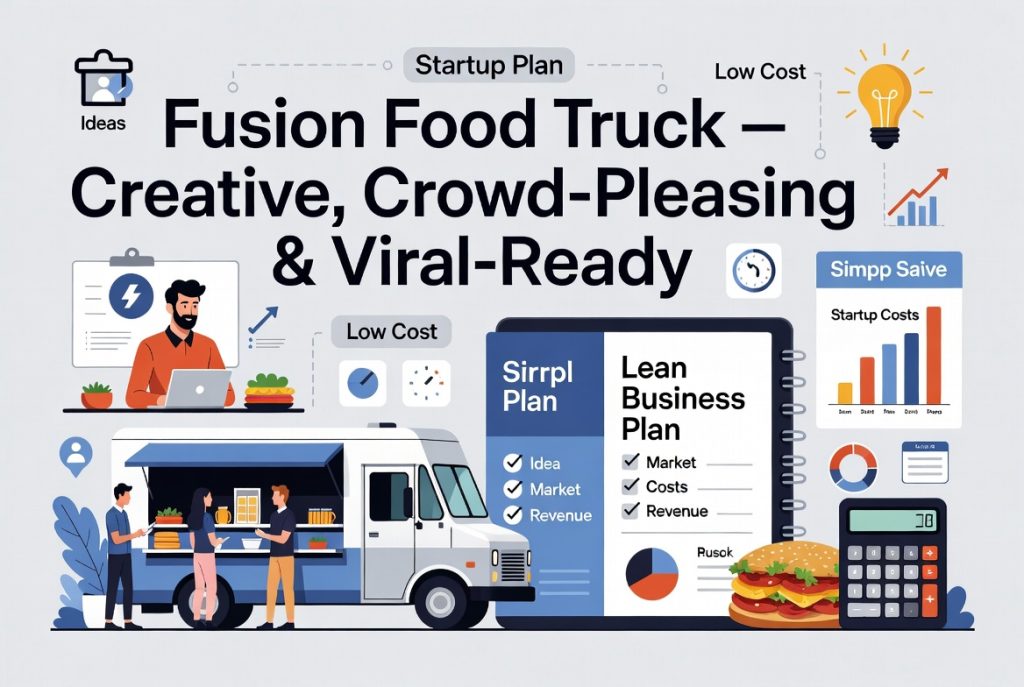
Fusion Food Truck – Creative, Crowd-Pleasing & Viral-Ready
Fusion cuisine (think Korean BBQ tacos, tikka masala burritos, or ramen burgers) is perfect for foodies looking for something bold and unique. This niche thrives in college towns, downtown business districts, or at cultural festivals.
Your food truck marketing plan should highlight what makes your fusion dishes unique and worth the wait — clever names and eye-catching visuals help.
Unit 80, Cherry Orchard Business Park, D10NX96, Dublin 10, Ireland
Monday – Saturday: 08:30 to 20:00
Sunday: Closed
Email: info@grandbusinessplan.com
Mobile/WhatsApp: +353 85 888 2817

Unit 80, Cherry Orchard Business Park, D10NX96, Dublin 10, Ireland

Most Popular
Services
© 2026 Grand Business Plan ®All rights Reserved