
Professional Business Writer

Introduction
Choosing the right type of business funding is one of the most important decisions an entrepreneur can make. Whether you’re launching a startup, expanding your business, or simply needing cash flow support, your funding strategy affects ownership, growth speed, and long-term financial stability.
In this comprehensive guide, we break down the major types of business funding, how each option works, when to use them, and how to choose the best one for your needs. From traditional loans to equity financing and modern alternatives like crowdfunding, you’ll find a complete roadmap to help you secure capital confidently.


Debt Financing for Businesses
Debt financing is one of the most common types of business funding. It allows companies to borrow money and repay it with interest over time.
Debt financing involves borrowing funds from banks, lenders, or financial institutions with a structured repayment plan.
Equity Financing for Startups
Equity financing allows you to raise funds by selling ownership shares in your company.
Instead of repaying a loan, investors receive a share of future profits — often making this the ideal option for high-growth startups.


Government Business Grants
Government grants are non-repayable funds provided to support business innovation, expansion, or startup development.
However, competition is high, and applications require well-structured proposals.
Business Loans & Credit Lines
Business loan programs and credit lines provide flexible capital for working capital needs, expansion, or equipment purchases.


Crowdfunding & Peer-to-Peer Funding
Crowdfunding has become an increasingly popular way for startups and small businesses to raise capital without giving up ownership.
Peer-to-peer business loans connect you directly with individual lenders instead of banks, often offering faster approvals.
Revenue-Based Financing
Revenue-based financing allows businesses to borrow money and repay it as a percentage of monthly revenue.


Equipment Financing Options
If your business requires machinery, vehicles, or technology, equipment financing allows you to acquire assets without paying upfront.
Microloans for Small Businesses
Microloans are small, short-term loans designed for startups and micro-enterprises needing $500–$50,000.

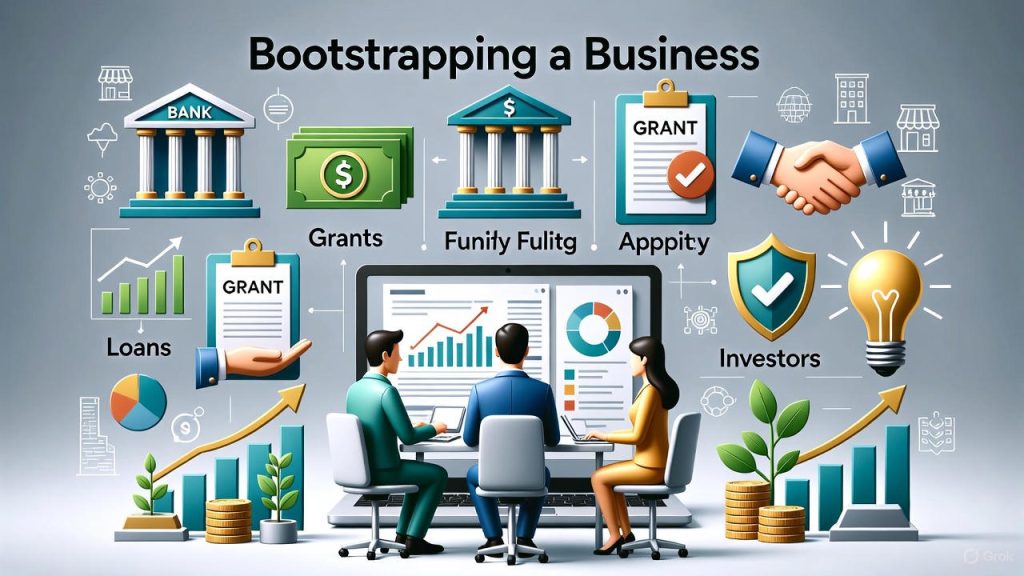
Bootstrapping a Business
Bootstrapping means using personal savings, reinvesting profits, or relying on minimal external funding.
This is ideal for founders who prefer control and sustainable growth.
Trade Credit for Business
Trade credit allows businesses to purchase goods or services now and pay the supplier later (usually 30–90 days).


How to Choose the Best Type of Business Funding
Conclusion
Understanding the different types of business funding empowers you to choose the best strategy for your company’s growth. Whether you prefer debt financing, equity funding, government grants, or alternative methods like crowdfunding, the right choice depends on your business model, cash flow, and long-term goals.
If you want help selecting the best funding option or need detailed content for another keyword, feel free to ask!

Unit 80, Cherry Orchard Business Park, D10NX96, Dublin 10, Ireland
Monday – Saturday: 08:30 to 20:00
Sunday: Closed
Email: info@grandbusinessplan.com
Mobile/WhatsApp: +353 85 888 2817

Unit 80, Cherry Orchard Business Park, D10NX96, Dublin 10, Ireland

Most Popular
Services
© 2026 Grand Business Plan ®All rights Reserved